

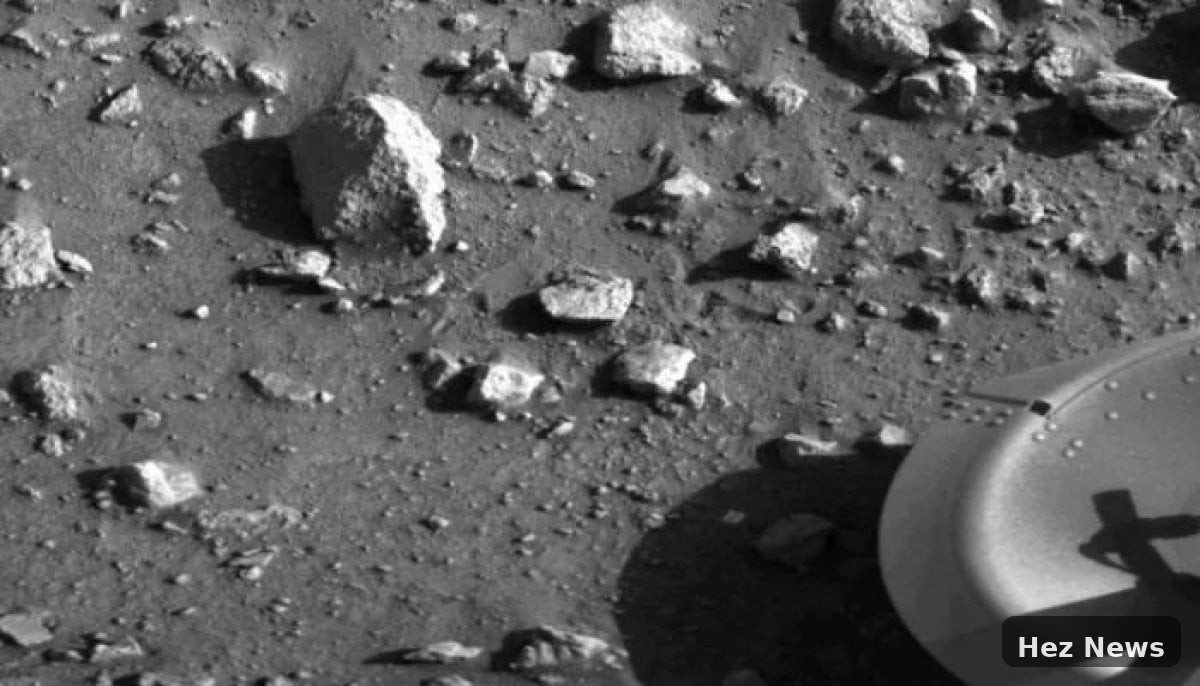
On July 20, 1976, the Viking 1 spacecraft made history by landing on the surface of Mars, marking a monumental achievement in space exploration. Just twenty-five seconds after its touchdown on the plains of Chryse Planitia, Viking 1 transmitted the first images of the Martian landscape back to Earth. This moment not only showcased human ingenuity but also opened a new chapter in our understanding of the Red Planet.
The Significance of Viking 1
The Viking program, which included two spacecraft, was designed to explore Mars with unprecedented detail. Viking 1's successful landing and subsequent imaging paved the way for future missions and research. For many Nigerians and indeed the global audience, this event was a reminder of the possibilities that lie beyond our planet and the importance of investing in science and technology.
Impact on Space Exploration
The photographs taken by Viking 1 revealed a Martian surface covered in rock and dust, raising questions about the planet's past and its potential to support life. The data collected by the spacecraft also provided insights into the Martian climate and geology, establishing a foundation for future missions. As Nigeria aims to enhance its own space program, the achievements of Viking 1 serve as an inspiring benchmark.
Celebrating the Legacy
As we reflect on the 50th anniversary of Viking 1’s landing, it’s crucial to acknowledge the role of international collaboration in space exploration. Nigeria has been making strides in the field, with initiatives such as the Nigerian National Space Research and Development Agency (NASRDA), which focuses on satellite technology and research. The success of missions like Viking 1 highlights the importance of investing in scientific research and education in Nigeria, inspiring a new generation of scientists and engineers.
Looking to the Future
While we celebrate the achievements of the past, it is essential to foster a culture of innovation and curiosity in Nigeria. The Viking missions have not only expanded our knowledge of Mars but also ignited interest in science and technology globally. As Nigeria continues to develop its capabilities in space exploration, the legacy of Viking 1 serves as a guiding light, encouraging young minds to dream big and aim for the stars.
Conclusion
In conclusion, the landing of Viking 1 on Mars 50 years ago was a significant milestone that changed the landscape of space exploration. For Nigeria, it underscores the importance of investing in science, technology, and education to prepare for future challenges and opportunities in the ever-evolving field of space research.





Leave a Comment