

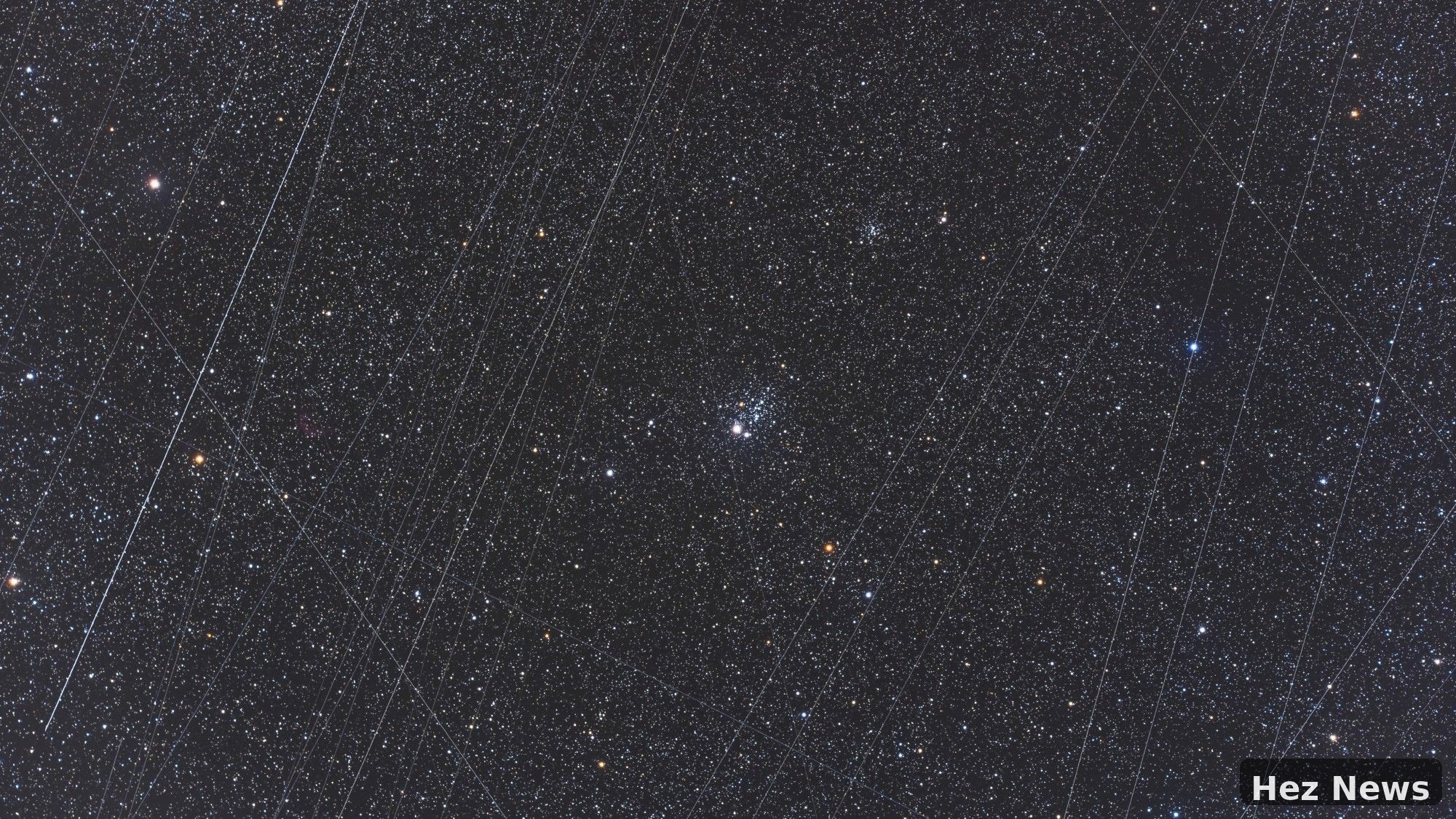
The night sky, a natural wonder cherished by many, is facing potential disruption due to the increasing number of private space ventures. The U.S. Federal Communications Commission (FCC) holds significant power in approving these massive spaceflight projects, which could drastically alter our celestial views.
Understanding the Role of the FCC
The FCC, an independent agency of the U.S. government, regulates interstate and international communications. It has the authority to grant licenses for satellite launches and operations, influencing how private companies can operate in space. Recently, this power has raised concerns among observers about the implications of unchecked space commercialization.
The Global Concern
As these private companies, often backed by billionaires, embark on ambitious space initiatives, the potential for light pollution and overcrowding in orbit increases. This could lead to a significant deterioration of our night sky visibility, affecting not just astronomers but also ordinary people who enjoy stargazing. Experts have warned that we could be heading towards a future where the beauty of the night sky is overshadowed by artificial satellites.
Nigeria's Perspective
For Nigerians, the night sky is not just an aesthetic experience; it is also a cultural and scientific resource. Traditional stories and scientific observations have been passed down through generations, often tied to celestial events. With the rise of space commercialization, there is a growing concern that these cultural ties could be disrupted.
Moreover, as Nigeria advances in its own space exploration initiatives through the National Space Research and Development Agency (NASRDA), the implications of global space policies become increasingly relevant. The country is working towards enhancing its satellite capabilities, which could be hindered by the over-saturation of commercial satellites.
International Law and Regulation Challenges
Currently, international space law lacks robust frameworks to govern the activities of private companies in space. Treaties such as the Outer Space Treaty of 1967 provide some guidelines, but they are often inadequate in addressing the complexities of modern space activities. This gap in regulation poses a challenge not only to nations but also to the sustainability of outer space environments.
Moving Forward
As the world grapples with the implications of private space ventures, it is crucial for countries, including Nigeria, to engage in international dialogues aimed at establishing comprehensive regulations. This would ensure that the night sky remains a shared heritage, accessible and enjoyable for future generations.
In conclusion, while the advancements in space technology present exciting opportunities, they also come with responsibilities. It is essential to strike a balance between innovation and preservation, ensuring that the wonders of the night sky are protected for all.





Leave a Comment