

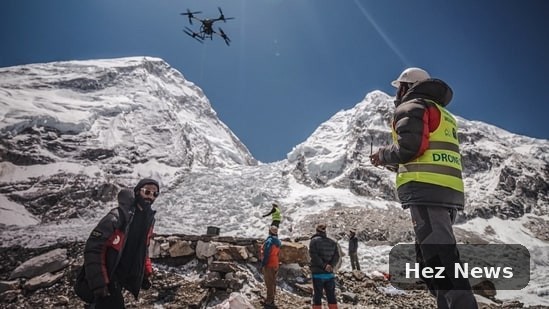
In a notable display of technological rivalry, the United States and China are intensifying their competition for drone supremacy, with the majestic backdrop of Mount Everest serving as the latest arena for their innovations. This strategic race has implications not only for national security but also for the potential benefits to developing nations, including Nigeria.
Strategic Importance of Drones
Drones have revolutionized various sectors, from agriculture to surveillance, and are increasingly seen as vital tools in modern warfare and disaster management. As nations strive to enhance their capabilities, the stakes are particularly high in regions like the Himalayas, where challenging terrains and limited access can hinder traditional operations.
The U.S. Initiative
In May, Sergio Gor, President Trump’s special envoy for South Asia, made headlines by appearing at the base camp of Mount Everest. Dressed in a black jacket marked with “Trump Force One,” Gor highlighted the significance of a newly unveiled drone, emphasizing its capabilities in challenging environments.
Gor's visit underscores the U.S. commitment to maintaining its technological edge in the face of growing competition from China. With increased funding and research into drone technology, the U.S. aims to set the standard for future developments.
China’s Response
In contrast, China has also ramped up its drone development, focusing on enhancing their operational range and efficiency. The Chinese government has invested heavily in research and development, aiming to deploy more advanced drones that can operate in extreme conditions like those found in the Himalayas.
This competition is not merely about military prowess; it also has significant implications for global trade, environmental monitoring, and even humanitarian efforts. For instance, drones can aid in delivering supplies during natural disasters—a concern that resonates with Nigeria, which frequently faces such challenges.
Implications for Nigeria
The race for drone supremacy between these two superpowers could be a game-changer for Nigeria. As the country grapples with issues such as insecurity, inadequate healthcare delivery, and agricultural challenges, the adoption of drone technology could provide innovative solutions.
For instance, drones could be utilized for aerial surveillance in conflict zones, monitoring crops for better yield, or even delivering medical supplies to remote areas. The potential benefits are immense, making it crucial for Nigeria to observe and possibly adopt these advancements in drone technology.
Global Reactions
International reactions to this technological rivalry have been mixed. While some nations express concern over the militarization of drone technology, others view it as an opportunity to enhance their own capabilities. Countries like Nigeria could benefit from partnerships with either of these superpowers, leveraging their advancements to improve local conditions.
As the situation evolves, it's clear that the implications of this competition extend far beyond military concerns, affecting global relationships and innovations that can drive development in various sectors.
Conclusion
In conclusion, the ongoing competition between the U.S. and China for drone supremacy at Mount Everest is a reflection of the broader geopolitical landscape. For nations like Nigeria, the advancements in drone technology could offer critical solutions to pressing challenges. As these developments unfold, it is imperative for Nigeria to stay informed and engaged in the global conversation about technology and its applications.





Leave a Comment